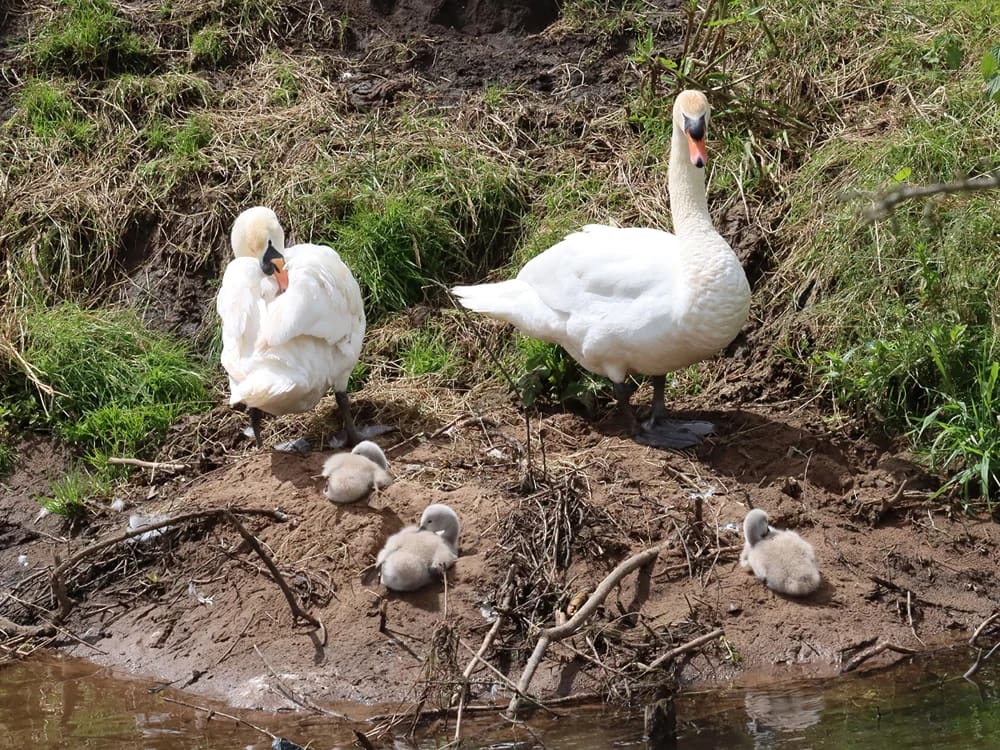
Councillor Robert Townsend, Chairman of Stone Town Council's Environment Sub-Committee, has shared an update on progress at Crown Meadow following extensive management work on the site's two wetland scrapes.
Wetland Restoration Delivers Results
The two wetland scrapes underwent major management work last year to remove willow saplings, dominant grasses and accumulated silt. The work has restored the scrapes' ability to support a diverse range of plant life and their capacity to store floodwater as part of the meadow's natural flood management function.
Mute swans have returned to nest in the scrape and have successfully hatched seven cygnets. A pair of dippers have also successfully nested — described as an indicator of the health of the Trent and Scotch Brook.
Summer and autumn visitors to Crown Meadow can look out for plants associated with damp habitats, including Meadowsweet, Purple Loosestrife, Tansy and Great Willowherb.
Path Improvements and Visitor Access
The diagonal path crossing the meadow is frequently submerged during flooding, forcing walkers to divert across muddy ground and causing damage to the meadow. Stone Town Council plans to raise the path slightly to help it stay drier for longer and improve drainage.
Tackling Invasive Plant Species
Himalayan Balsam, originally introduced to Britain as a garden plant in 1839, has become established along the banks of the River Trent and Scotch Brook in Crown Meadow. The invasive plant forms dense stands that crowd out native species by competing for light, water and nutrients.
Stone Town Council established a volunteer group in 2025 to tackle Himalayan Balsam across Crown Meadow as part of efforts to address the growing problem.